When hunting happens
In short, hunting is possible from September to January, with a peak from October to December. These are the general periods most relevant to walkers, from the current Danish order on hunting seasons. Regional exceptions apply.
- Roe deer: buck 16 May–15 July and 1 October–31 January; doe and kid 1 October–31 January
- Red deer stag: 16 October–31 December
- Fallow deer, sika deer and wild boar: roughly 1 September or 1 October to 31 January
- Fox: 1 September–31 January
- Mallard, teal, wigeon and other dabbling ducks: 1 September–31 December, and on the sea also 1–31 January
- Greylag goose: 1 September–31 January; sea ducks such as eider (drake): 1 October–31 January
- Pheasant: 1 October–31 January; hare: 1 November–31 January
Ducks and geese may be hunted from 1½ hours before sunrise to 1½ hours after sunset. Otherwise hunting is generally only allowed from sunrise to sunset. Seasons can change, and a revision was planned, so check the current dates before your trip.
State forests stay open
The Danish Nature Agency (Naturstyrelsen) does not close its forests during hunts, and so it puts up no signs. You can walk there as usual. Dogs must always be on a leash in forests, and in designated dog forests they may run free if they are under control. A private owner may close a forest for a while, but the closure must be clearly signposted.
Local practice varies. In North Zealand in 2025/26, Naturstyrelsen held 6 hunts in 6 forests, all in daytime on weekdays, with signs at the main entrances. Walking was safe, but visitors could hear shots and meet loose hunting dogs.
There is no public national hunting calendar, so you won't usually know in advance which forest has a hunt on a given day.
On the beach and the coast
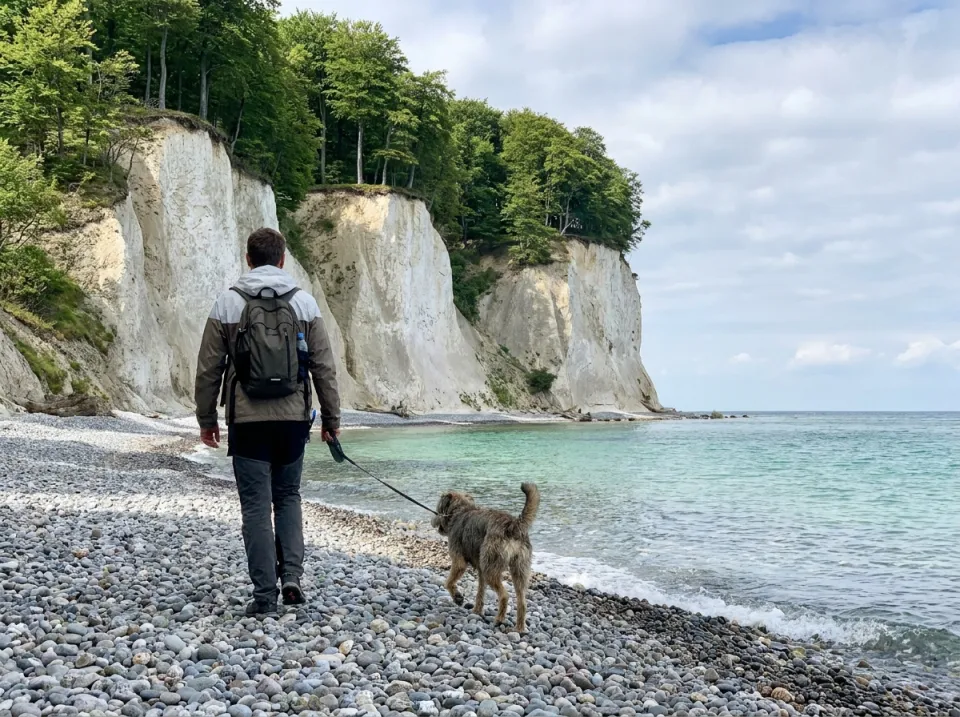
On the sea, coastal hunting is allowed from the highest daily water line seawards. This means hunters stand at the waterline or in the water, not on the dry beach above it. On the sea there is no hunting within 100 m of summer-house areas or within 500 m of urban zones, and no shots within 50 m of homes without the resident's consent.
Early mornings and dusk at the water's edge are when duck hunters are most likely to be out. If you walk there at those times, keep your dog close and give hunters a wide berth.
Practical tips for your walks
Dog forests for off-leash time
Dog forests are the places where your dog may run free under control, so they are the natural choice for off-leash time in autumn and winter. They are not automatically free of hunting, so the tips above still apply. The general leash rules are on rules for dogs in Denmark.
-
 Dog Parks Denmark
Every dog forest on a map, offline, with fencing, facilities and directions. For iPhone and Android.


Sources
- Retsinformation: order on hunting seasons (BEK nr. 470 of 17 May 2024)
- Retsinformation: Danish hunting law, coastal hunting (2023)
- Naturstyrelsen: where you may walk on its land
- Naturstyrelsen Nordsjælland: hunts in the forests
Information checked: October 2026