Salt water and fresh water
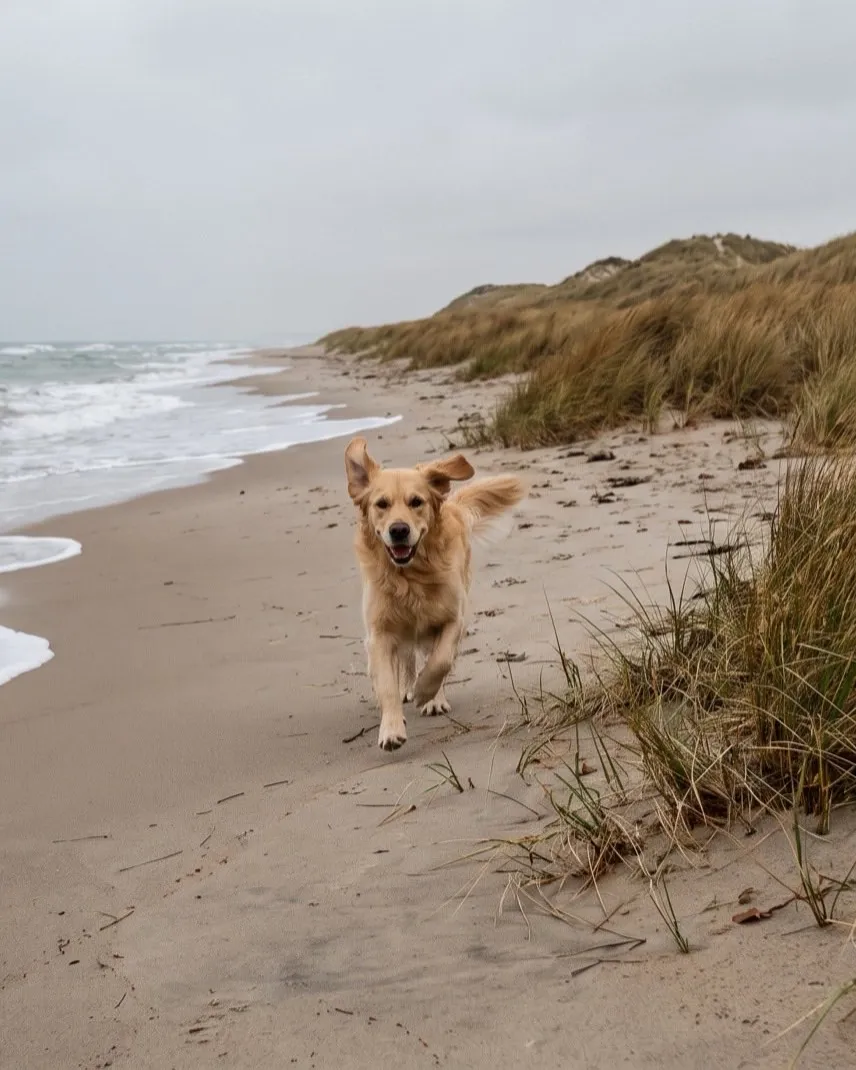
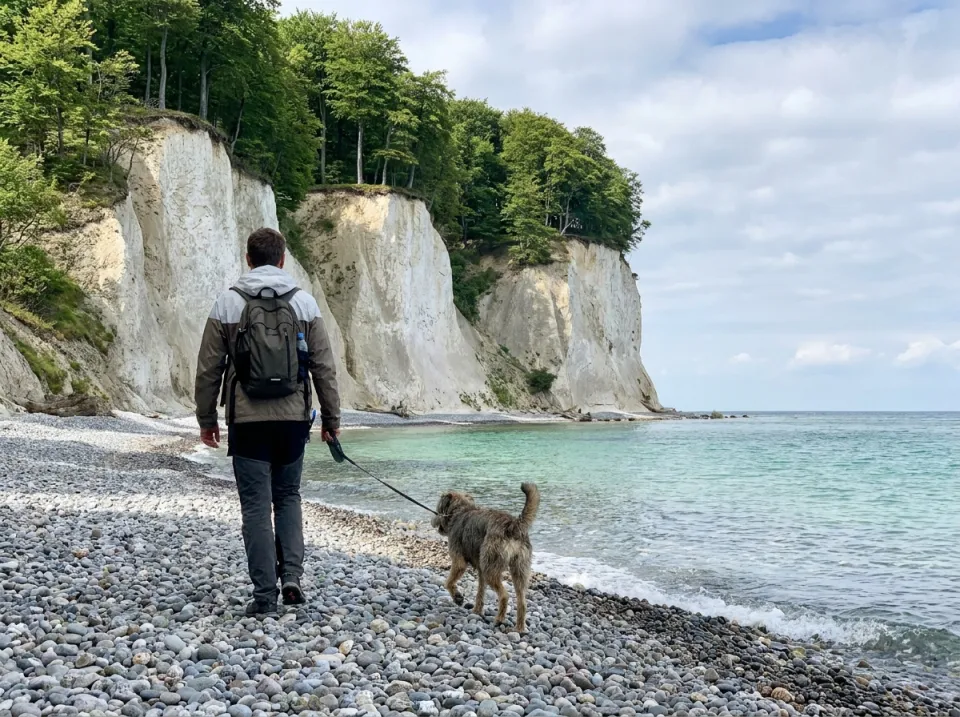
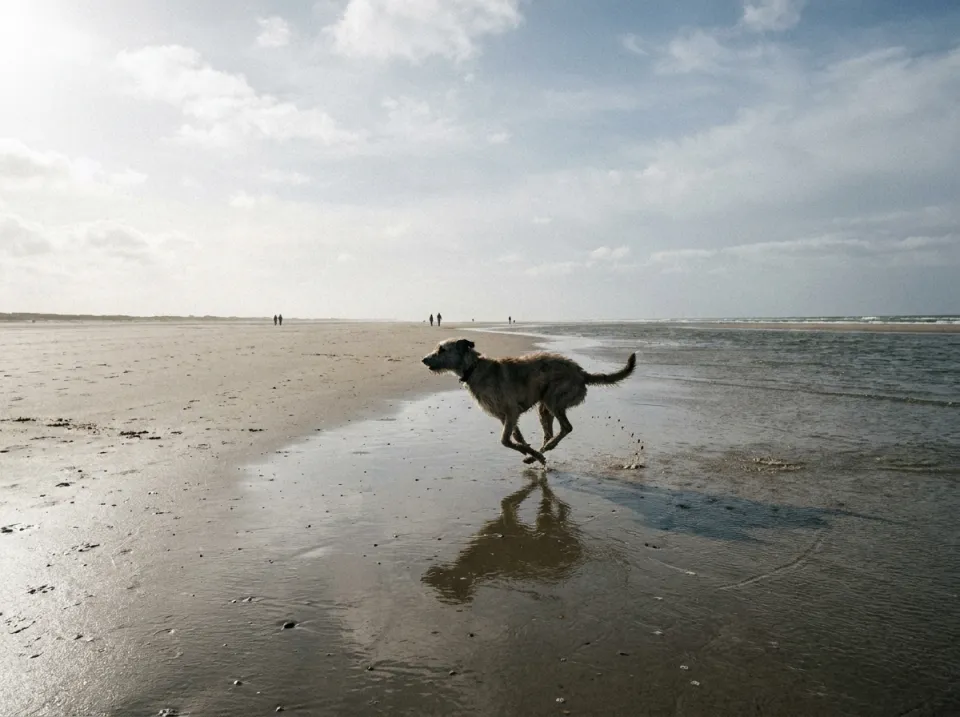
Dogs that play in the waves swallow seawater. A lot of it can poison a dog. Signs are diarrhoea, vomiting, tiredness, stiffness and cramps. If you see them, contact a vet quickly.
- Bring fresh drinking water and a bowl, and offer it often.
- Take short breaks from ball games in the water, so your dog doesn't keep swallowing waves.
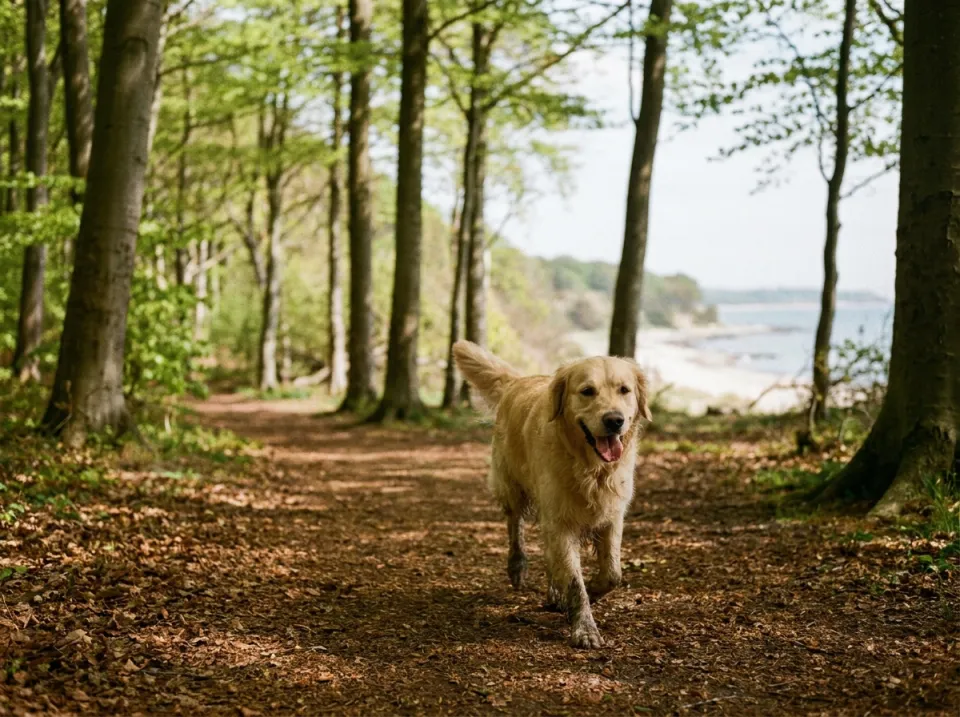
- From 1 April to 30 September dogs must generally be on a leash on the beach. From 1 October to 31 March they may run free on many beaches if you have full control. Signs take priority.
Jellyfish, weever fish and things on the shore
Lion's mane jellyfish (brandmand) can sting, also when they lie washed up on the sand. The weever fish (fjæsing) is the only venomous fish in Danish waters. In the mating season it comes into shallow water ½–1 m deep, where a dog can step on it. The first aid published for people does not cover dogs, so if your dog is stung, contact a vet.
Lumps washed up on the beach are worth a look. In December 2025, white paraffin lumps washed up along about 40 km of the Thy west coast, from Hanstholm to Agger Tange. Thisted Kommune said dogs like to taste or eat it, that this is bad for their stomachs, and asked owners to watch their dogs and leave the lumps where they are.
Dead birds and bird flu
Dogs are not easily infected with bird flu, but caution and hygiene around sick or dead wild animals are advised. Keep your dog away from dead birds and leave them where they lie. You can report them in the "FugleinfluenzaTip" app from the Danish Veterinary and Food Administration (Fødevarestyrelsen).
If your dog had contact with ducks, pheasants, gulls or birds of prey and shows flu symptoms, see a vet straight away and mention the bird contact. You may rinse your dog's mouth and wash your dog. Don't feed raw wild bird meat from bird-flu areas.
Blue-green algae
The Danish Environmental Protection Agency (Miljøstyrelsen) says washed-up blue-green algae have caused serious poisonings in dogs, probably because they ate the algae. The highest risk is from July to September. Keep your dog out of water with a lot of algae and away from algae on the shore. Municipalities monitor bathing water and issue the warnings, so look out for signs.
Symptoms can appear within 15–60 minutes. Go to the vet immediately and stop your dog licking its coat.
Heat in the car and on the sand
Never leave your dog in the car when it is above 20 °C. At 20 °C outside, a car can reach 40–50 °C in half an hour. If you see an animal in a hot car, find the owner, then call 114, or 112 if its life is in danger.
Hot sand and asphalt can burn paws. On warm days, go to the beach early or late, and look for shade.
Our packing list covers the water, towel and shade you need for a beach day.
When to see a vet straight away
- Vomiting, diarrhoea, stiffness or cramps after a lot of swimming or playing in the sea
- Any sign of illness after contact with algae, or algae on the coat
- A sting from a jellyfish or weever fish with swelling or pain
- Flu symptoms after contact with dead or sick wild birds
- Heavy panting, weakness or collapse on a hot day
- Your dog has eaten a lump of paraffin or something unknown from the shore
How to find a vet on holiday is in our vet guide. For plants and food, look it up on can dogs eat it.
Before you set off for the coast, check which beaches allow your dog today.
-
 Dog Beaches Denmark
Free for iPhone and Android: for each beach, whether your dog may run free today, must be on a leash or may not come, plus dog forests nearby.


Sources
- Fødevarestyrelsen: bird flu, information for pet owners
- Fødevarestyrelsen: look after animals in the summer heat
- Miljøstyrelsen: blue-green algae and bathing
- Thisted Kommune: paraffin on the beach
- Sundhed.dk: weever fish
Information checked: October 2026